Helgoland 2025 Talks Are Online!
30 talks given at the centennial celebration of quantum mechanics on Helgoland are now on YouTube — and there's a documentary coming too.
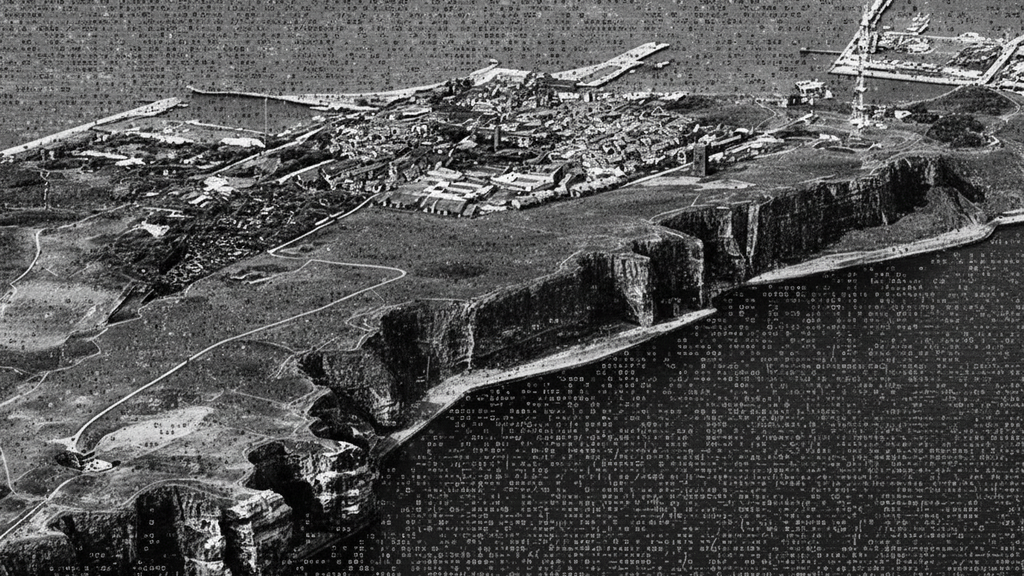
In 2019, a group of professors from Yale University and the Max Planck Institutes realized something remarkable: quantum physics was about to turn 100. Not just the field in general — the specific, pivotal moment when a young Werner Heisenberg retreated to a small island in the North Sea called Helgoland, suffering from hay fever and armed with little more than matrices and stubbornness, and emerged with a new mechanics of the atom. The organizers began planning a celebration at the birthplace itself.
I first heard about the conference from Steve Girvin when we were at Rensselaer Polytechnic Institute in April 2024 to cover the launch of their IBM quantum system. Steve mentioned this gathering being planned for Helgoland the following summer and asked if I'd be interested in coming out to record some podcast episodes. I said yes immediately — it sounded like a once-in-a-career opportunity.
As details of the program took shape, it became clear this wasn't just a conference. The organizers — Jack Harris, Florian Marquardt, Steve Girvin, and Časlav Brukner, among others — had assembled a truly extraordinary group: Nobel laureates, pioneers of quantum information, and a new generation pushing the boundaries of what's possible. This was going to be an event of historic consequence, and a few podcast interviews wouldn't be enough of a record.
So today I'm thrilled to share that 30 talks delivered in the Nordseehalle on Helgoland are now available on the New Quantum Era YouTube channel.
The lineup speaks for itself. Elise Crull and Douglas Stone on the history of quantum theory. Philip Ball on the meanings we've made of it. Christopher Fuchs on QBism. Nicolas Gisin on quantum nonlocality and cryptography. Isaac Chuang, Juan Maldacena, John Preskill — names that have defined the textbooks and the theorems. Carlo Rovelli, whose book Helgoland gave the conference a literary echo of its own origin story. Jun Ye's strontium clocks. Nergis Mavalvala's gravitational wave detectors. Rainer Blatt's trapped ions. Nathalie de Leon's diamond qubits. Vedika Khemani's time crystals. Ignacio Cirac and Peter Zoller, whose 1995 proposal launched an entire field. And many more — 30 talks spanning the foundations of quantum mechanics, quantum computing, quantum sensing, quantum gravity, and the big open questions that connect them all.
I hope you'll spend some time with these talks. Each one is a window into how the people closest to the science think about what they're doing and why it matters. The playlist is here.
But I should tell you — there's more to come. The panels will be released as well, for one thing. But there's something bigger.
You may have noticed that I said Steve invited me to Helgoland to record podcast episodes. We did go to Helgoland. We did not record any podcast episodes.
As the program came together and I saw the scale of what was being assembled — the names, the topics, the setting — it became obvious that showing up with a laptop and a microphone wasn't going to cut it. Conversations with my cousin, a documentary filmmaker, made it even clearer: if we were going to capture this, we had to do it for real. So we raised money. We hired professionals. We rented real, honest-to-goodness film gear. And over those six days on Helgoland, we shot a documentary.
I owe enormous thanks to our crew — Gayle, Lora, Jakob, and OCH — who brought skill and patience to a demanding shoot in a remote and logistically challenging location. Huge thanks to Ilyas Khan, our executive producer, whose belief in the project made it possible. And to the organizers, Jack, Florian, Steve, Časlav, and everyone else who opened every door and made us feel not just welcome but essential.
And to my wife, Ayann, who initially encouraged me to consider graduating from podcasting to documentary filmmaking, and then came aboard as the film's producer. She handled the planning, travel logistics, renting equipment, watching the budget, the set design, the craft services, the transport of gear from location to location, and about a hundred other things that don't have official film-crew titles but without which nothing would have happened. It simply wouldn't exist without you.
The documentary is now in post-production and will be released later this year. Stay tuned.