Project Chapel
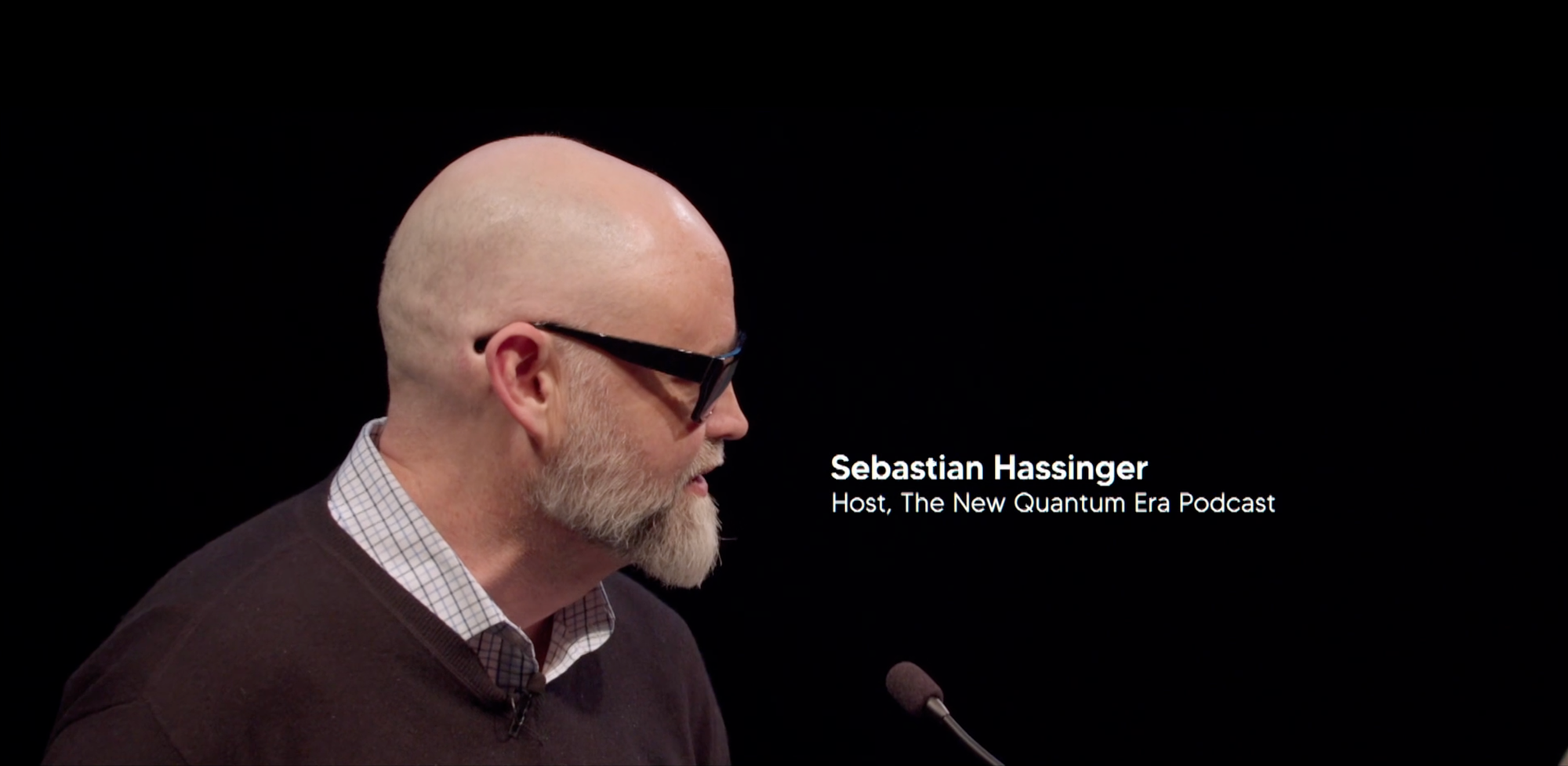
In spring of 2024, I was invited to attend the ribbon cutting of an IBM System One on the campus of Renssellaer Polytechnic Institute in Troy, New York and of course I said yes. Over the course of the event I was graciously provided the campus radio studio to record my first-ever in-person podcast interviews, and to lead a panel discussion on stage, which also became an episode of the podcast. At the time there was some talk about a documentary effort, but, as I had my hands full with my own efforts, I didn't take any particular notice of it. Well, the film, Project Chapel is here, and available to view on PBS' site. I enjoyed watching it, and was very pleasantly surprised when, about an hour in, guess who appears on screen!?
It was fun revisiting the whole thing, which was quite enjoyable for me. The installation of a very early stage technology causing so much excitement among the students and professors of RPI resonated with how I think it must have felt on the campus of Princeton when von Neumann and his collaborators were working on their computer at the Institute for Advanced Studies. I know I make that parallel a lot, but it's a very important one for me. That machine also filled a room, was error-prone, had 4 kilobytes of memory and ran at about 1 megahertz clock speed. The phone in your pocket has 10^8 more memory and runs 10^11 faster.
If you had been around in the late 40s and had asked someone working on that device to tell you what the industry use cases were for their project, you would have gotten a lot of puzzled looks. There was a lot of very imaginative exploration of potential uses, but it is only in hindsight that we can see how their work began to lay the foundation for numerical weather prediction, scientific computing, financial modeling, graphics, and even machine learning.
The quantum computers we have today are mostly incapable of performing tasks that can't already be done by classical computers, faster and more accurately. In part that is due to the immense challenges faced to create high quality qubits at a large scale, and in part it is due to our presumptions about value rooted in 80 years of classical information technologies. Instead of focusing on what quantum computers cannot do well, we must openly explore their essential nature, their innate characteristics, as openly and creatively as possible, to find our way to that which we do not already know. That's why academic and scientific access to quantum computers, especially open system design quantum computers, is so critical to the continued progress we have enjoyed over the past twenty years in the field.
Thanks again to Osama Raisudden for the invite and everyone at RPI for being such gracious hosts.